
Vicksburg Former Resident Sources
Order matters in a backward address search. Warren County's assessor and GIS tools fix the parcel and its current ownership fields. The Chancery Clerk keeps the recorded land trail. From there, city directories, newspapers, maps, cemetery resources, and local indexes add household and time context around each transfer. No single record answers every question. The table separates a record's documented date range from the kind of fact it can support.
| Source | Years It Covers | Where Held | What It Shows |
|---|---|---|---|
| Warren assessor and GIS parcel records | Current tax and appraisal data, timing varies by parcel | Delta Computer Systems and Warren GIS | PPIN, parcel, owner, mailing and property-address fields, legal and map clues |
| Chancery Clerk land-record research | Service says land research reaches back to 1984 | Warren County Chancery Clerk | Recorded instruments and direct, reverse, subdivision, and section indexes |
| Cataloged Vicksburg directories | Selected years from 1860 through later twentieth-century holdings | MSU, MDAH, public library, and McCardle routes | Dated printed name and address references when the volume supplies them |
| Vicksburg Post archive | Issues reach back to 1825 | Warren County-Vicksburg Public Library | News and obituary leads, subject to archive limits |
| Sanborn fire-insurance map | 1886 | Library of Congress | Structure and street context across 12 sheets |
The clerk's 1984 statement about land research marks a service boundary. It does not mean earlier records are missing. For an older transfer, ask about clerk books, MDAH holdings, local courthouse or archive material, and professional help where a formal title question is at stake. No web search replaces that offline record trail.
Start Vicksburg Parcel History With PPIN
Open the Warren County Delta appraisal or real-property tax search and enter the address. Save the PPIN, parcel number, and legal description. Keep the source date with them. Both searches accept an owner name as well. The appraisal search also takes address number and street, parcel, and PPIN, while the tax search takes section, township, and range, keeping requests stable when an old street spelling or displayed address is incomplete.
| PPIN or parcel | Use it to link the online parcel card, GIS geometry, and a focused clerk request. |
|---|---|
| Legal description | Keep the lot, subdivision, section, or plat reference because older instruments may rely on it instead of a street address. |
| Property or situs address | This identifies the taxable parcel location. It is not proof of who was present there. |
| Owner mailing address | This is a contact field for the owner, which may differ from the property address. |
| Map and plat references | Use them to ask for the corresponding plat, deed book, or page rather than assuming a boundary from a screen. |
The county's parcel card keeps an owner mailing address separate from the property street. It also lists PPIN, parcel references, plat-book pages, and tax-map links. It includes field-work and review dates as well, plus value figures. Still, the card has real limits. It supports parcel-to-owner research. But it cannot prove occupancy or identify former household members on its own.
Vicksburg Deed Chain for Past Households
The Warren County Chancery Clerk is the custodian of land records. Warranty deeds, deeds of trust, powers of attorney, plats, authorities to cancel, and related instruments all sit in that office. Direct, reverse, subdivision, and section indexes are maintained alongside them. Start with the present parcel identifiers. Request the current owner's acquisition instrument. Then follow the named parties back one transfer at a time. A deed names owners, mailing recipients, trustees, executors, and other parties, so a name alone does not prove the person lived there.
- Retrieve the current PPIN, parcel, legal description, and displayed owner data from the assessor or GIS record, keeping the owner mailing field separate from the property field.
- Ask the Chancery Clerk for the current owner’s acquisition deed using a book and page when known, or a precise parcel and legal-description request when it is not.
- Read the instrument to identify the current grantee and the prior grantor, then note the recording reference and exact property description.
- Search the prior grantor as a grantee in the direct or reverse index to locate that person’s earlier acquisition, trying spelling alternatives when needed.
- Repeat the comparison backward, then use subdivision or section indexes, clerk books, archives, or a qualified title professional when an earlier link is not found.
- Grantor and grantee
- The grantor transfers an interest in an instrument. The grantee receives that interest. Those roles can change in every earlier deed.
- Chain of title
- A sequence of recorded transfers connected through the named parties and the same legal description. It should not be assumed complete until the records are checked.
- Legal description
- The lot, subdivision, section, plat, or other written land description used in a recorded instrument. It is often more stable than a street address.
Vicksburg Deed Requests Stay Offline
Deed access has one big catch. The county FAQ states that deed records are not available through an online search, so everything runs through the office. The Chancery Clerk sits at 1009 Cherry Street in Vicksburg, reachable at 601-636-4415, open Monday through Friday from 8 a.m. to 5 p.m. A written or counter request should name the parcel, PPIN, book and page if known, legal description, and the exact instrument or party sought. Ask precisely. The clerk does not do title searches. Nor does it give legal advice.
| Request detail | Why it matters |
|---|---|
| Current parcel and PPIN | Connects the online tax or appraisal result to the clerk’s land records. |
| Book and page, when known | Supports a narrow copy or fax request and reduces ambiguity. |
| Grantor or grantee spelling alternatives | Helps when a direct or reverse index does not produce the expected party. |
| Subdivision, section, or legal description | Provides a second route when the street wording has changed or is missing. |
The county's land-record material lists concrete fee examples. Copies made by another person run $0.25 per page. Clerk or employee copies cost $0.50 per page. A certified copy of a complete document is $1, and the schedule also carries recording and indexing charges. Confirm the current fee before paying, because the cited schedule is dated 2020. Faxed copies may be possible when the requester supplies the book and page and pays fees in advance.
Offline-records check. A good assessor or GIS result does not mean the underlying Vicksburg deed can be searched online. Use the parcel data to make a precise clerk request.
Vicksburg Parcel Fields and Former Residents
Warren County recording standards list the fields that make a document useful for a narrow historical request. A warranty deed should carry preparer and return information, grantor and grantee names and addresses, phone numbers, a notarized seller signature, legal-description and indexing instructions, and covenants or easements. The paper trail holds more than a name. Cross-check the legal description and the book-page reference before trusting a match.
Keep source roles separate in your notes. An owner mailing address is not the property address. An assessor record can lag behind what the courthouse shows. A map line is not a survey. The Chancery Clerk's warning matters when a transfer affects legal rights. Local records build a well-documented history. They do not replace professional title review when that level of certainty is required.
Vicksburg Former Households in Print
Once a transfer is dated, turn to the nearest cataloged directory. Census-era material helps too, and it can show who lived there before. Mississippi State University lists Vicksburg directory years at 1860, 1870, 1895, 1899, 1904, and 1906. Selected Polk years appear as well. MDAH historical microfilm covers selected years from 1906 through 1935. Its city-and-telephone microform spans 1991 through 1993. They are leads, not a full index. The Warren County-Vicksburg Public Library local-history collection page describes the library's holdings. Those holdings support historical-household research in Vicksburg.
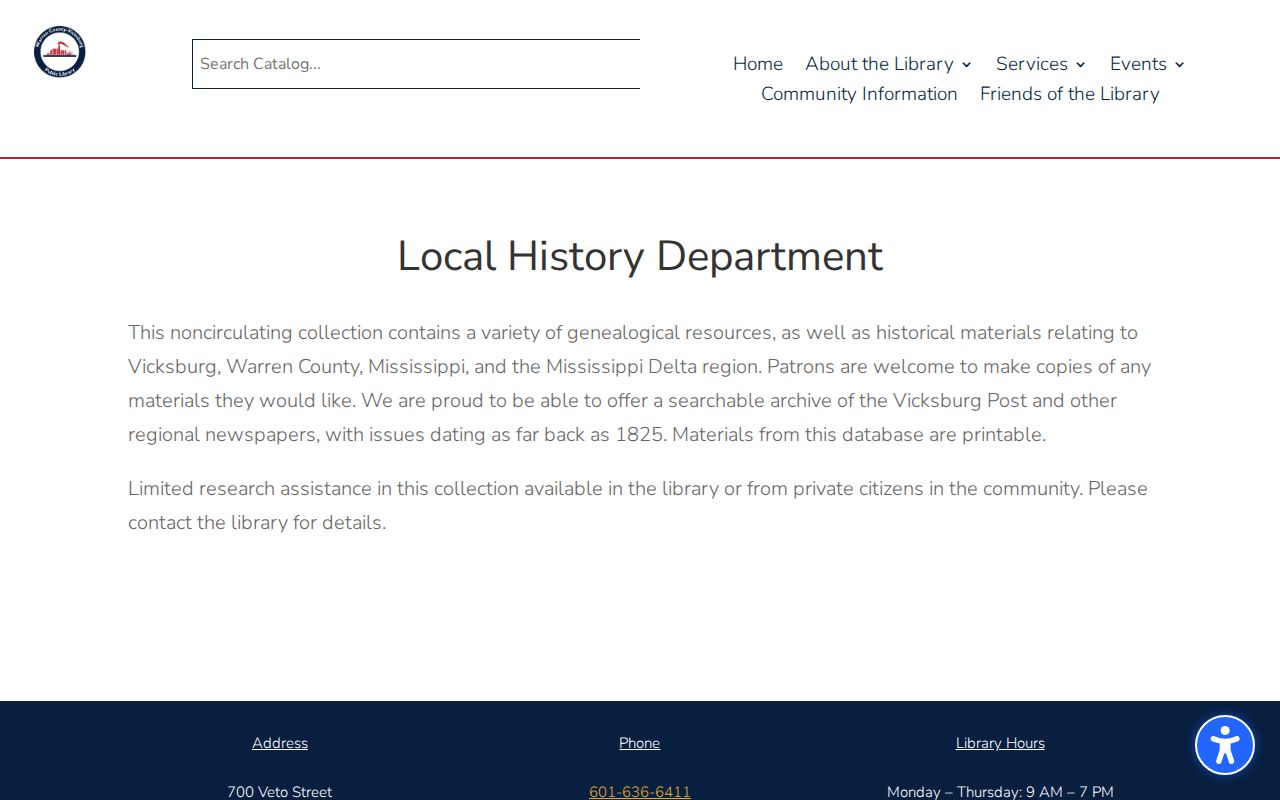
The library keeps its genealogy and local-history material noncirculating. It serves Vicksburg, Warren County, and the wider Delta. Copies are allowed. Database pages can be printed. Its Vicksburg Post archive reaches back to 1825, and it is joined by regional papers. Every directory finding gets a dated news or obituary path worth checking. Learn the archive's search and clipping limits first. That way, a missing result never gets mistaken for proof that a past resident left no trace.
Vicksburg Census Pairing for Former Households
Treat directory and census work as a pairing exercise, not two copies of one fact. Pick a directory year near a recorded transfer or a newspaper item. Then set it beside a census or tax roll that fits the same window. You might also use a cemetery record, obituary, or funeral index. Mississippi State University's Warren holdings cover a wide span. These include the 1820 census, an 1830 census index, 1843 tax rolls, and the 1860 mortality schedule. McCardle's collections round this out. They add local family files, marriages, court inventories, maps, and funeral material that a residents directory entry alone cannot supply.
- Set the deed or tax-record date beside the nearest cataloged directory year and write down the exact printed text without filling missing fields from another source.
- Compare that reference with the relevant census or tax-roll era, noting whether the source identifies a place, family connection, or event.
- Search the Vicksburg Post archive and McCardle indexes for a dated obituary, funeral, court, or newspaper lead that fits the same name and period.
- Use cemetery or probate material to test a family clue, while remembering that a burial or plot record does not prove a street address.
Pairing the sources separates a true household sequence from a repeated name. It also reveals honest gaps. Directory years often skip the exact period a question targets. Resist blaming a mismatch on street renumbering or a courthouse loss. Neither event occurred in Vicksburg records. Note the gap plainly and move to another source.
Vicksburg Sanborn and Index Checks
The Library of Congress Vicksburg Sanborn map of 1886 spans 12 sheets. Read it beside plat records, legal descriptions, and dated directory or newspaper references. Together these can reconstruct a building's history and its street context. A Sanborn sheet can test an older description. It cannot prove that an old street number matches today's. For assigned-address questions, the Warren Address Office covers both Vicksburg city limits and the county. That makes it a sensible fallback. The McCardle Library's local collection page describes the holdings available for historical-household research in Vicksburg.
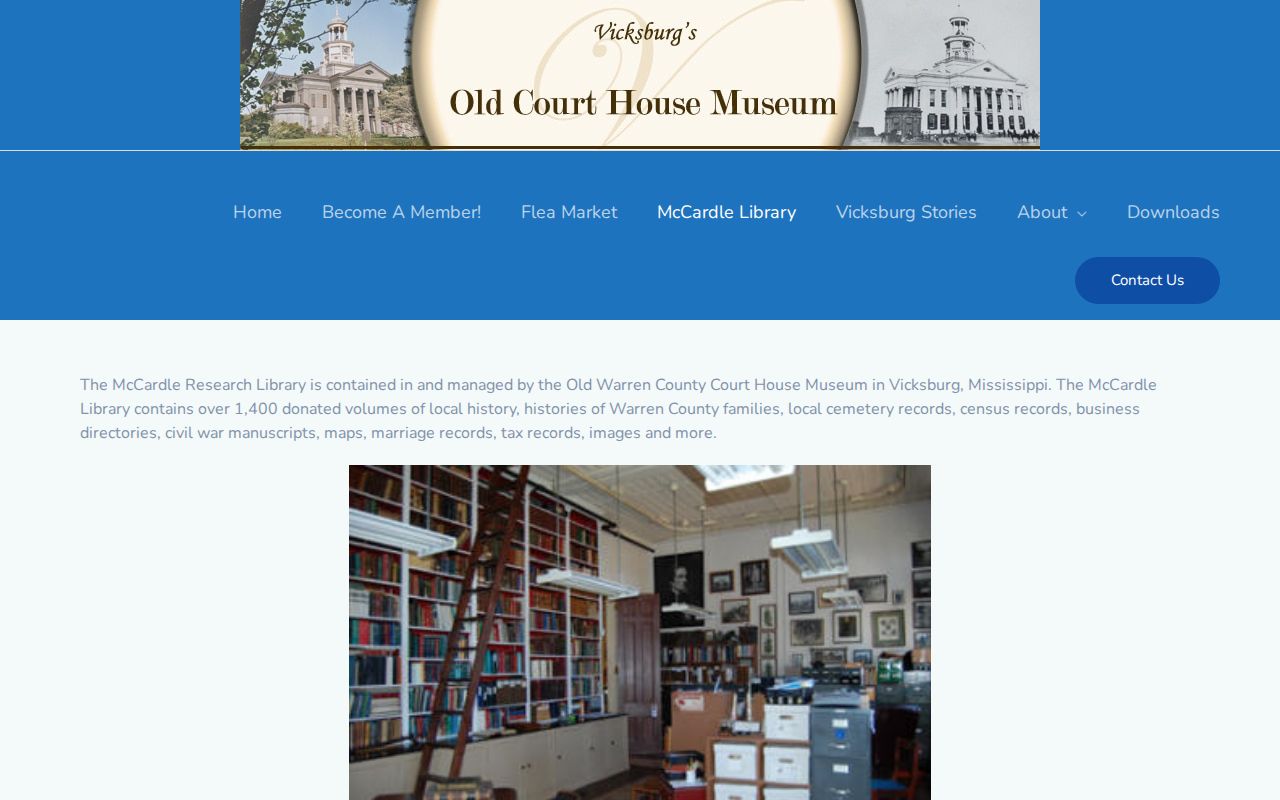
McCardle opens by appointment and offers assisted research. More than 1,400 donated volumes cover local history. They also hold census records, business directories, maps, marriage, tax, images, and family material. The named indexes run deep: Gordon Cotton Newspaper Articles, Fisher Funeral Home material from 1934-2017, marriage indexes beginning in 1810, Civil War manuscripts, Spanish records, blueprints, and court inventories. Ask about restrictions and copy terms before leaning on any single index entry for a residents directory lookup.
Vicksburg Historical Household Evidence
Historical household research holds up best as a chain of dated, limited claims. The assessor ties a parcel to owner and legal-description fields. The Chancery Clerk holds the recorded transfers. A directory or census adds a household reference only when the source actually prints one. Newspapers, funeral files, cemetery sources, and probate material supply event clues around it. Every item should keep its date, its repository, and its page, image, or book reference. A past-residents trail stays verifiable that way.
The city cemetery's interments database reaches back to 1967. A separate typed tombstone manuscript dates from 1985. The two tools serve different purposes and carry different accuracy profiles. A street directory or resident lookup should cite whichever one was actually searched. A cemetery search can check the deceased name, the original purchaser, and notes at once. That sometimes surfaces a family or lot lead. It is still a cemetery source. It does not place a living person at a particular property.
Vicksburg House-History Boundaries
A former-household search fits family history, house history, heir research, and personal curiosity. Keep living people out of a broad trail. Dated public records can settle the question on their own. Mississippi's access rules draw hard lines. They do not permit harassment, stalking, impersonation, or any attempt to defeat a protected-address arrangement. The state's Address Confidentiality Program exists as protection for qualifying people. It is never a search tool.
Lawful personal research. Vicksburg address history is best used to understand a parcel and its past. Do not use a name, mailing field, or archive clue to stalk, harass, or harm anyone.
A missing deed points to the Chancery counter or a written request. A library gap calls for a direct question. Ask the public library, McCardle, MDAH, or MSU about what material exists. An address discrepancy belongs with the Warren Address Office or the assessor. These local channels beat filling any gap with an assumption about past residents.